
Tonsillectomy
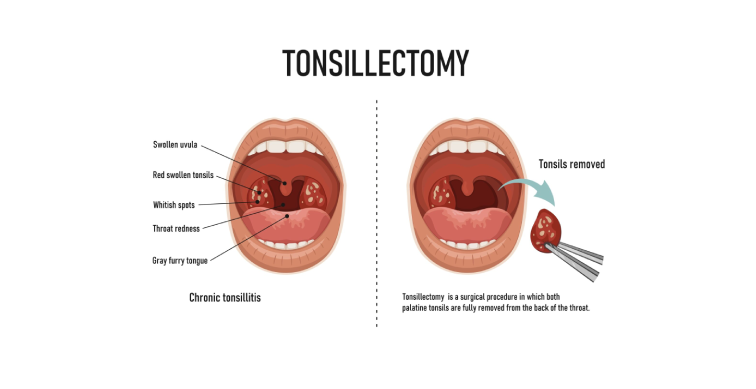
A tonsillectomy is a surgical procedure in which the tonsils are removed. The tonsils are two lymphatic tissues located at the back of the throat that help fight infections, but sometimes they become problematic and require removal. This procedure is typically performed to treat recurring tonsillitis or other related issues.
Symptoms
- Frequent Tonsillitis: Recurring or chronic inflammation of the tonsils, typically marked by sore throat, fever, and difficulty swallowing.
- Sleep Apnea: Enlarged tonsils can obstruct the airway during sleep, leading to snoring or pauses in breathing (sleep apnea).
- Abscess or Infection: In some cases, the tonsils may develop an abscess (a collection of pus), leading to severe pain and difficulty swallowing.
- Difficulty Swallowing: Enlarged tonsils can make swallowing food and liquids painful or difficult.
- Bad Breath: Chronic tonsillitis can lead to halitosis (bad breath) that doesn’t improve with oral hygiene.

Treatment Options
For bacterial infections like streptococcal tonsillitis.
Over-the-counter pain relievers like ibuprofen or acetaminophen for managing sore throat symptoms.
Gargling warm salt water can help reduce swelling and soothe the throat.
Drinking plenty of fluids helps soothe the throat and prevents dehydration during illness.
Tonsillectomy is typically a last resort when other treatments haven’t resolved the problem. A healthcare provider can help determine whether this procedure is appropriate based on an individual’s medical history and symptoms.
Causes and Risk Factors
- Bleeding: Some bleeding may occur post-surgery, particularly within the first few hours or days.
- Infection: There’s a risk of infection at the surgical site.
- Dehydration: Due to difficulty swallowing in the first few days, dehydration can be a concern.
- Pain: Throat pain can persist for several days, particularly when swallowing.
Prevention and Management
- Bleeding: Some bleeding may occur post-surgery, particularly within the first few hours or days.
- Infection: There’s a risk of infection at the surgical site.
- Dehydration: Due to difficulty swallowing in the first few days, dehydration can be a concern.
- Pain: Throat pain can persist for several days, particularly when swallowing.