
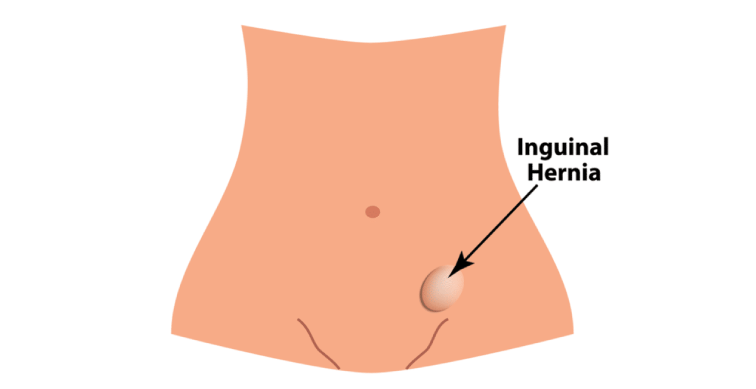
Inguinal Hernia
An inguinal hernia is a condition where part of the intestine or other tissue bulges through a weak spot or tear in the abdominal muscles, specifically in the inguinal canal, located in the groin area. This is one of the most common types of hernias and can occur on one or both sides of the groin. It is more common in men than women due to the anatomy of the male pelvis and inguinal canal.
Symptoms
- Visible Bulge: The most noticeable symptom is a bulge or lump in the groin area, which may become more prominent when coughing, standing, or lifting heavy objects.
- Pain or Discomfort: You may experience pain or a dull ache around the bulge, particularly during activities that increase intra-abdominal pressure, such as coughing, bending, or lifting.
- Swelling: The area around the hernia may swell, especially with physical exertion or at the end of the day.
- Heaviness or Pressure: Some people report a feeling of heaviness or pressure in the groin.
- Burning or Aching Sensation: A mild burning or aching sensation may occur in the affected area.
- Nausea or Vomiting: If the hernia becomes incarcerated or strangulated (a medical emergency), it may cause nausea, vomiting, and an inability to pass stool or gas.
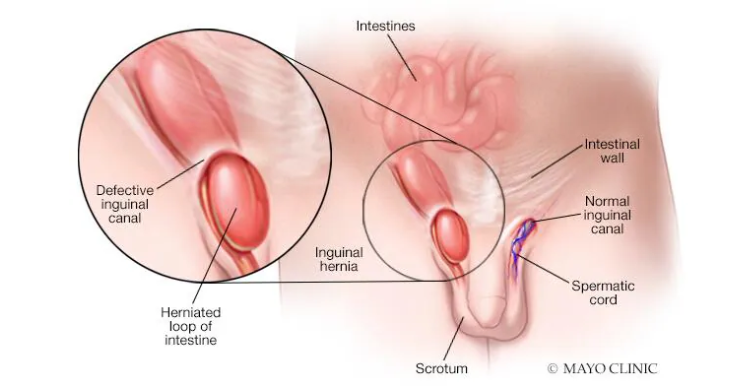
Treatment Options
- Watchful Waiting: If the hernia is small and not causing symptoms, a doctor may recommend monitoring it over time. Regular follow-up visits may be necessary to ensure that the hernia does not grow or cause problems.
- Hernia Support Garments: In some cases, a supportive truss or hernia belt may be used to provide temporary relief by applying gentle pressure to the affected area. However, this does not treat the hernia itself and is generally considered a temporary measure.
- Open Hernia Repair: This traditional surgery involves making an incision in the groin area, pushing the protruding tissue back into place, and then reinforcing the weakened area with sutures or mesh to prevent future hernias.
- Laparoscopic Hernia Repair: In this minimally invasive procedure, several small incisions are made, and a camera (laparoscope) is used to guide the surgeon in repairing the hernia. Mesh is often placed to reinforce the abdominal wall. This method typically has a quicker recovery time and less postoperative pain compared to open surgery.
- Hernia Mesh: In many cases, surgical repair involves placing a synthetic mesh over the weakened area of the abdominal wall to reinforce it and reduce the risk of the hernia returning.
An inguinal hernia is a common condition that can cause significant discomfort and complications if left untreated. While many inguinal hernias do not require immediate treatment, surgical repair is often necessary to prevent complications, such as incarceration or strangulation. Early diagnosis and appropriate management can ensure better outcomes and reduce the risk of further issues. If you suspect a hernia, it is important to consult a healthcare provider to discuss your options and develop a treatment plan tailored to your needs.
Causes and Risk Factors
- Heavy Lifting: Frequently lifting heavy objects can strain the abdominal muscles and cause a hernia.
- Chronic Coughing: Conditions like chronic bronchitis or smoking-related coughs can lead to persistent coughing, increasing pressure on the abdominal wall.
- Straining During Bowel Movements: Chronic constipation and straining during defecation can place pressure on the abdominal muscles.
- Obesity: Being overweight or obese increases the strain on the abdominal wall.
Prevention and Management
- Maintain a Healthy Weight: Avoid obesity to reduce strain on the abdominal muscles.
- Avoid Heavy Lifting: Use proper lifting techniques and avoid lifting heavy objects whenever possible. If lifting is necessary, always bend at the knees and lift with your legs, not your back.
- Treat Constipation: Prevent chronic constipation by eating a high-fiber diet, drinking plenty of fluids, and exercising regularly. Use stool softeners if needed to avoid straining during bowel movements.
- Quit Smoking: Smoking increases the risk of chronic coughing, which can contribute to hernia formation.