
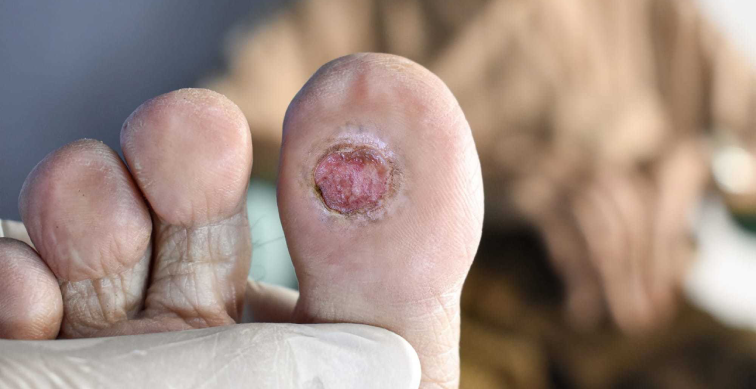
Diabetic Foot Ulcer
A diabetic foot ulcer is a common and serious complication of diabetes that results in an open sore or wound on the foot. It occurs when high blood sugar levels damage the nerves and blood vessels, leading to poor circulation and reduced sensation in the feet. This makes it difficult for a person with diabetes to notice cuts, blisters, or injuries to their feet, which can eventually lead to the development of an ulcer. Diabetic foot ulcers are prone to infection and can lead to more severe complications if left untreated, including amputation.
Symptoms
- Visible Sores or Wounds: A common sign is the appearance of an open sore or wound on the bottom of the foot, often in areas of pressure, like the heel, ball, or toes.
- Pain or Tenderness: There may be pain in the affected area, but in some cases, due to nerve damage (neuropathy), the ulcer may not be painful.
- Redness or Inflammation: The area around the ulcer may appear red or swollen, indicating inflammation or infection.
- Drainage or Pus: If the ulcer becomes infected, it may produce drainage, which can be clear or pus-filled. This can be a sign of an active infection.
- Foul Odor: An infected ulcer may have an unpleasant odor due to bacteria.
- Warmth: The skin around the ulcer may feel warm to the touch.
- Changes in Skin Color: The skin around the ulcer may become darker or show signs of poor circulation.
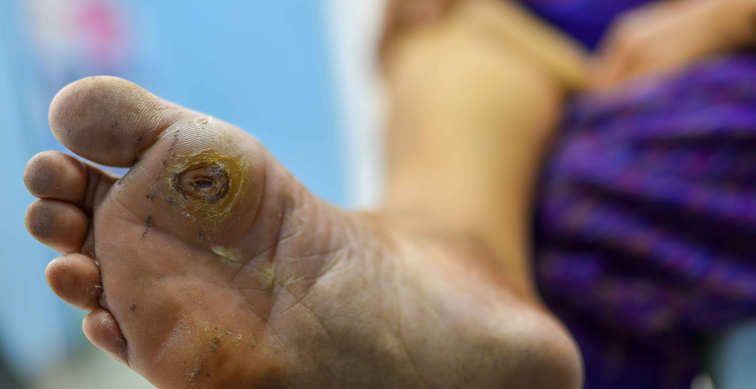
Treatment Options
Cleaning and Debriding: The ulcer is carefully cleaned and any dead or infected tissue is removed to promote healing.
Dressing: Appropriate dressings, such as hydrocolloid or foam dressings, are used to protect the wound, keep it moist, and help it heal faster.
Offloading: Reducing pressure on the ulcer is essential for healing. This can involve the use of special shoes, padding, or even crutches or a walking boot to take the pressure off the affected area.
Antibiotics: If an infection is present, oral or intravenous antibiotics may be prescribed to treat the infection.
Antiseptics: Topical antiseptics may be used to clean the wound and reduce the risk of infection.
Tight Blood Sugar Control: Keeping blood sugar levels well-managed is essential for the healing of diabetic foot ulcers. This includes regular monitoring of blood glucose and adjusting medications, diet, and exercise as necessary.
Diabetic foot ulcers are a serious complication of diabetes that require prompt attention to prevent infection and further complications, including amputation. With proper foot care, early detection, and effective treatment, the risk of diabetic foot ulcers can be minimized. Maintaining tight blood sugar control and regular foot exams is key to preventing this condition and ensuring overall foot health for individuals with diabetes.
Causes and Risk Factors
- Neuropathy (Nerve Damage): High blood sugar levels can damage the nerves in the feet, reducing sensation. This means that injuries, blisters, or cuts might go unnoticed, allowing them to develop into ulcers.
- Poor Circulation (Peripheral Artery Disease): Diabetes can cause narrowing and hardening of the blood vessels, limiting blood flow to the feet. Reduced circulation means slower healing and a higher risk of infection.
- Increased Blood Sugar: High blood sugar impairs the immune system, making it harder for the body to fight off infections.
Prevention and Management
- Regular Foot Inspections: Check your feet daily for any cuts, blisters, redness, or swelling. Use a mirror if needed to inspect the bottoms of your feet.
- Proper Foot Hygiene: Wash your feet daily with mild soap and warm water, and dry them thoroughly, especially between the toes.
- Moisturize the Feet: Keep your feet moisturized to prevent dry, cracked skin, but avoid applying lotion between the toes to reduce the risk of fungal infections.