
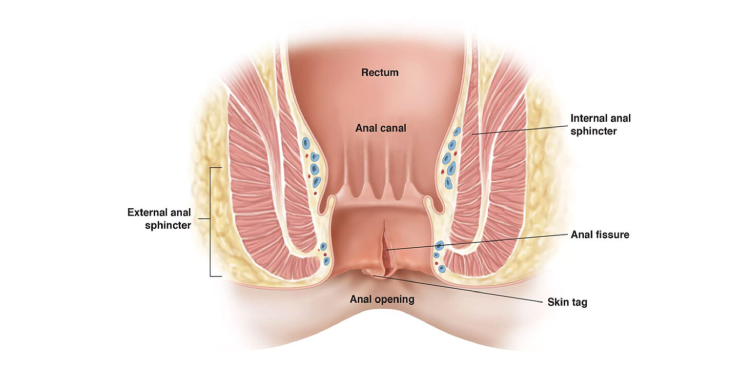
Anal Fissure
An anal fissure is a small tear or crack in the skin around the anus. This condition can be extremely painful, especially during or after bowel movements. The tear typically occurs when the skin is stretched too much, often due to passing a large or hard stool. Anal fissures are common and can affect people of all ages, though they are more frequent in infants and adults aged 30-40.
Symptoms
- Pain: A sharp or burning pain during or after bowel movements, which can last for several minutes to hours.
- Bleeding: Bright red blood on toilet paper or in the toilet bowl after a bowel movement, typically from the tear in the skin.
- Itching or Irritation: Discomfort or itching around the anus due to the fissure.
- Visible Tear: A visible crack or tear in the skin around the anus, especially during an acute episode.
- Spasms: Painful muscle spasms in the anal sphincter that can occur after a bowel movement, making the pain worse.

Treatment Options
Eating a diet rich in fiber (fruits, vegetables, whole grains) helps soften stools and reduces straining during bowel movements, promoting healing of the fissure.
Drinking plenty of water helps keep stools soft and reduces constipation.
Over-the-counter creams or ointments containing hydrocortisone or witch hazel can help reduce pain, inflammation, and itching.
Soaking in warm water for 10-15 minutes a few times a day, especially after bowel movements, can help relax the anal muscles and relieve pain.
In most cases, anal fissures can be treated successfully with conservative measures such as diet changes and topical treatments. However, if the fissure becomes chronic or doesn’t heal with conservative treatments, it is important to consult a healthcare provider for further evaluation and treatment options.
Causes and Risk Factors
- Constipation: Passing large, hard stools or straining during bowel movements is a common cause of anal fissures.
- Diarrhea: Chronic diarrhea can irritate the anal area and cause fissures.
- Childbirth: The pressure of delivering a baby can cause trauma to the anal region, leading to fissures.
- Anal Intercourse: Anal sex may cause tearing or irritation of the anal skin, leading to fissures.
Prevention and Management
- Eat a High-Fiber Diet: A diet rich in fiber helps keep stools soft and promotes regular bowel movements, reducing the likelihood of anal fissures.
- Stay Hydrated: Drink plenty of fluids to prevent constipation.
- Avoid Straining: Do not strain during bowel movements. If you feel the urge to go, do so promptly to avoid constipation.
- Use Soft Toilet Paper: Gently pat the anal area to avoid irritation.